Week 1 of a four-part series on the horticultural skills behind the plants we grow.
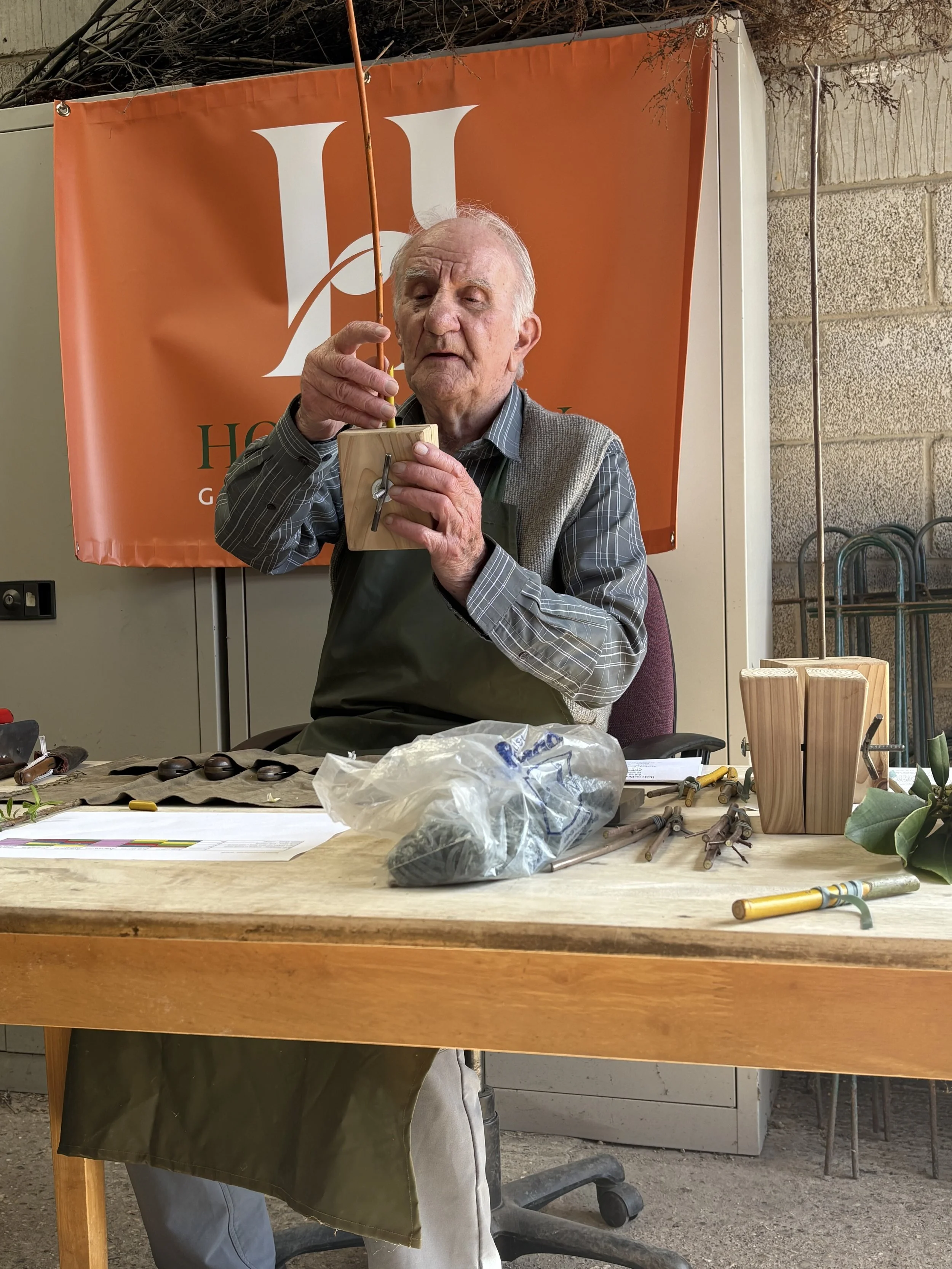
There’s a horticultural legend called Brian Humphrey who has been working in British horticulture since 1954. Trained at Kew and Writtle College. Joined Hillier Nurseries as a propagator and worked his way up to Production Director. Moved to Notcutts Woodbridge in 1986, where he refined their tree and container plant production. Then spent over a decade running his own wholesale nursery specialising in grafted plants before he retired.
He’s got an OBE, the RHS Victoria Medal of Honour, and an International Award of Honour from the International Plant Propagators’ Society. In 2019, at an age when most people have long stopped, he wrote The Bench Grafter’s Handbook — a 500-page reference book covering over 2,000 species and cultivars.
He’s also, it turns out, extremely funny and does NOT rate YouTube grafting videos.
I spent Saturday at Beth Chatto’s Plants & Gardens, where the day was split across four propagation masterclasses — but the hour I spent with Brian Humphrey, watching him turn a piece of wood and a rootstock into a new tree in under two minutes, means I’ll never look at trees quite the same way again.
Why I was there
The day was hosted by Hortistry — a new cross-sector group set up to preserve specialist horticultural knowledge and address skills shortages in professional growing. Their first Propagation Masterclasses ran this spring across four stations: grafting with Brian Humphrey, seed sowing with Harry Hoblyn and Dave West, cuttings with Debbie Alcock, and bulb chipping with Emily Allard. I spent the day rotating between them.
The level of people who’d cleared their diary to be there told you something. Hortistry had brought in three supporting specialists for the day: Tony Kirkham MBE VMH, formerly Head of the Arboretum at Kew, who stayed close to Brian’s grafting station; Matthew Pottage MHort, Head of Horticulture and Landscape Strategy at The Royal Parks and a regular voice on BBC Radio 4’s Gardeners’ Question Time; and Jack Aldridge, specialist in woody ornamental plants. Sir Nicholas Bacon Bt OBE DL — former President of the RHS and owner of Raveningham Hall — and Lady Susan Bacon were also in attendance. These are people at the top of their own craft, turning up to learn and support alongside everyone else. That’s how specialist this knowledge is — and how quietly it’s disappearing.
I signed up because I wanted to understand where plants come from. Not in the vague “a seed in the soil” sense — I’ve got the seed side well covered — but in the sense that half the shrubs and trees in British gardens aren’t seed-grown at all. They’re grafted. Japanese maples. Magnolias. Fancy rowans with pink berries. Even roses, mostly. And I didn’t really know what that meant, beyond a fuzzy idea that someone somewhere joins two plants together.
Turns out that’s more or less right, but the how is where it gets interesting.
What grafting actually is
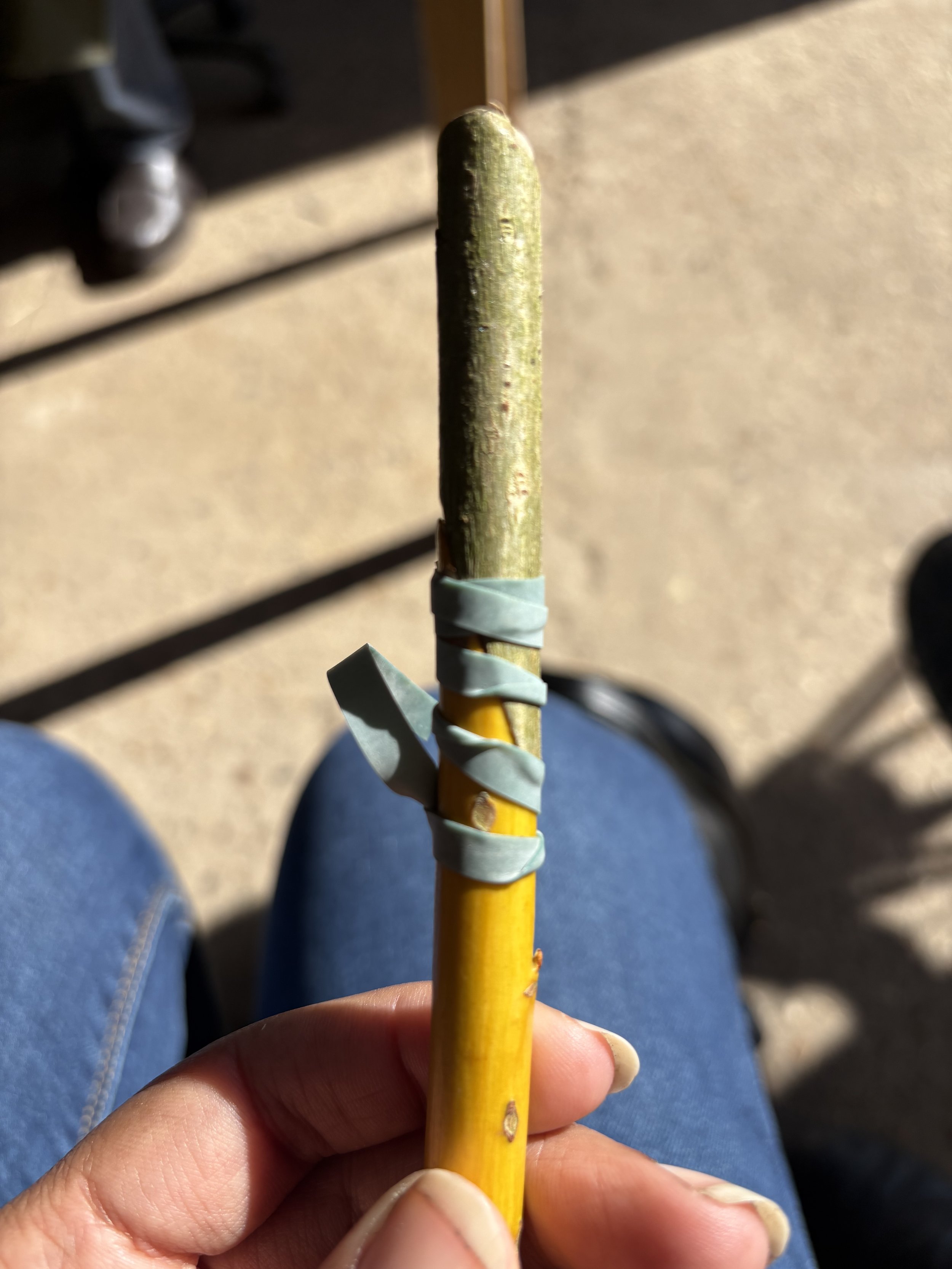
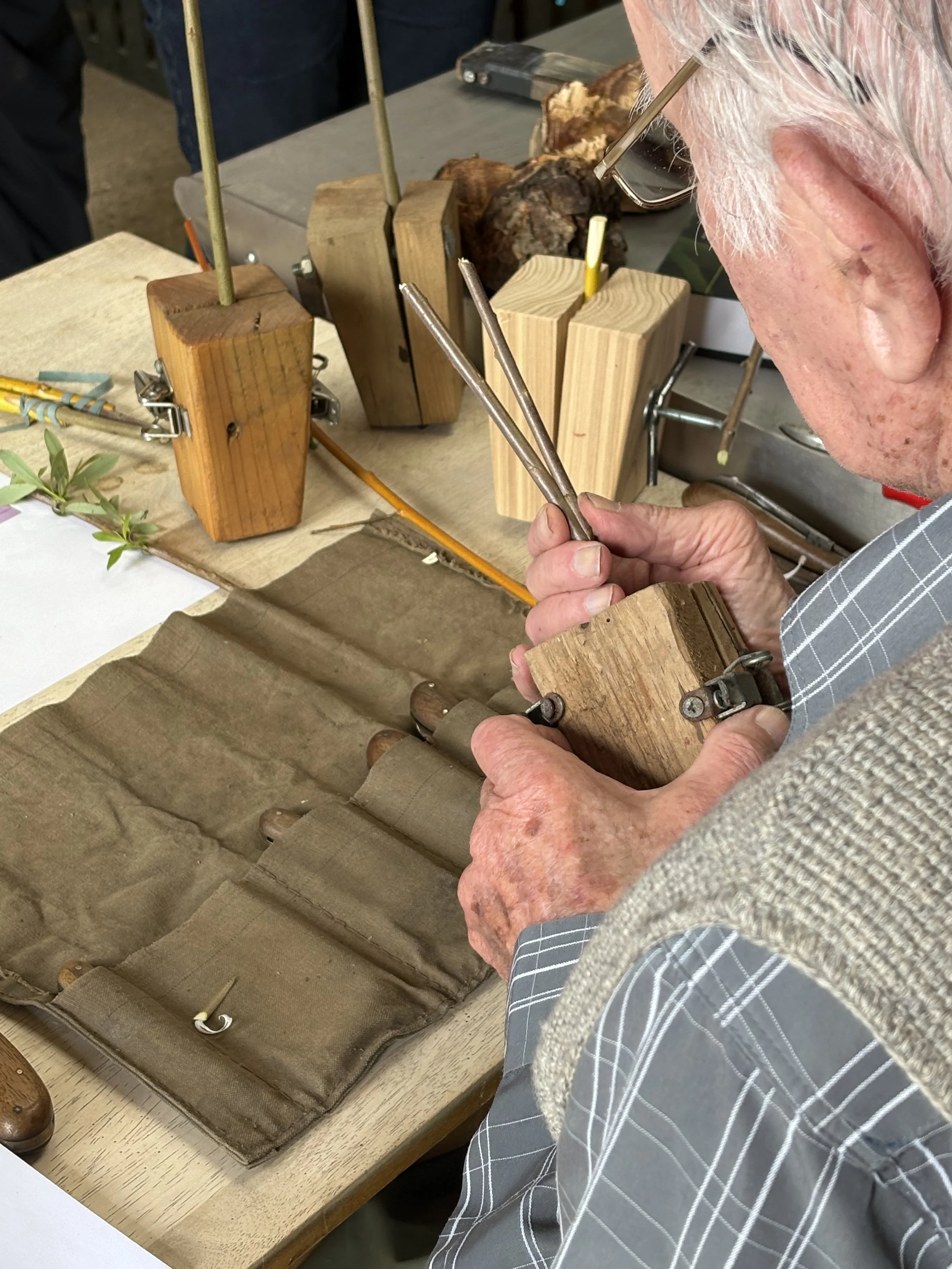
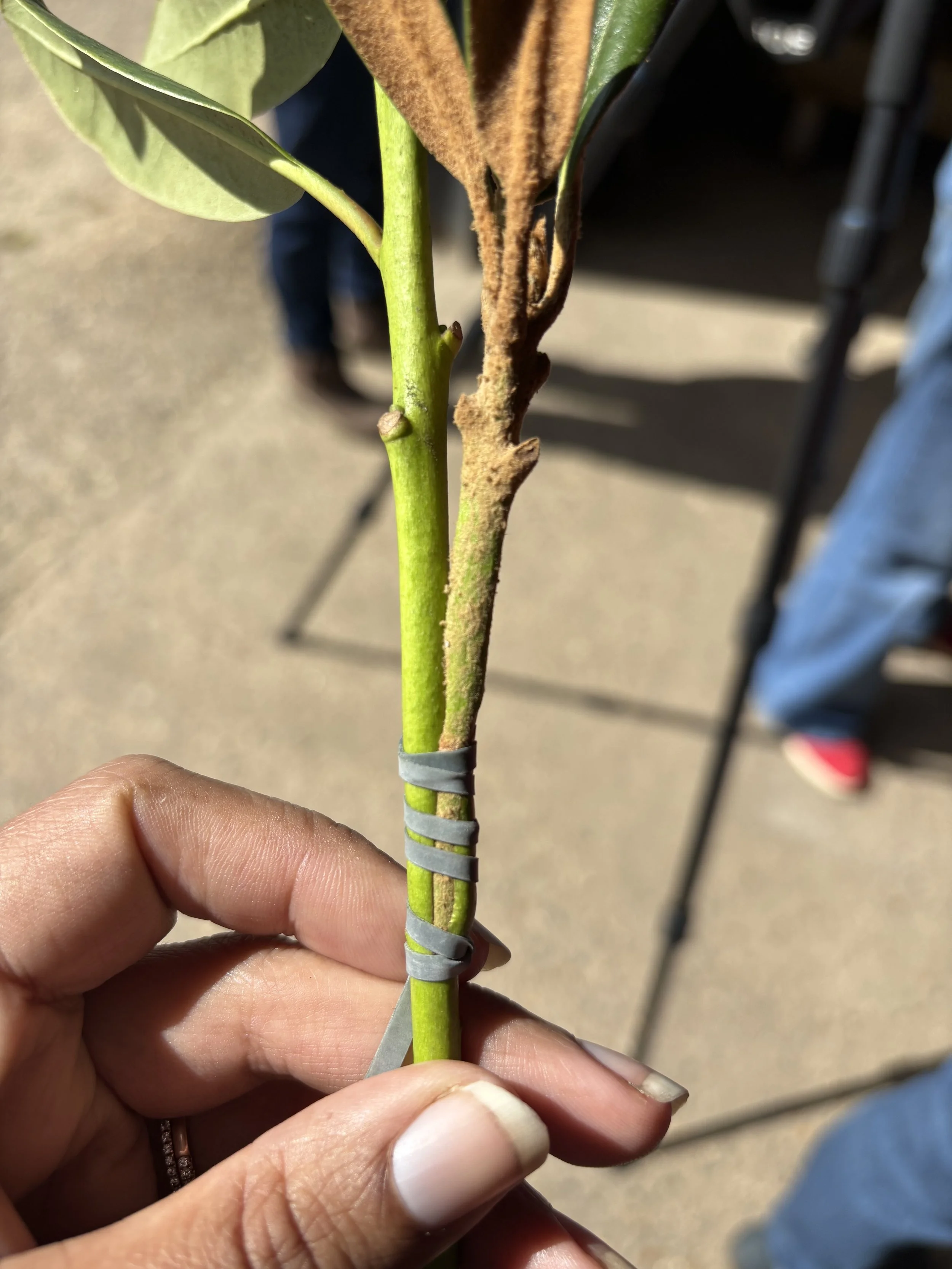
You take a rootstock — a tough, reliable, usually unfussy plant that’s happy in the ground — and you join a piece of something more desirable onto it. The top piece is called the scion. The scion is what you actually want: the pink-berried rowan, the particular magnolia, the Japanese maple with the good leaves. Underneath it, doing all the hard work of drinking and feeding, is a different plant entirely.
It’s a bit like a bionic plant. And the join, done well, lasts a lifetime.
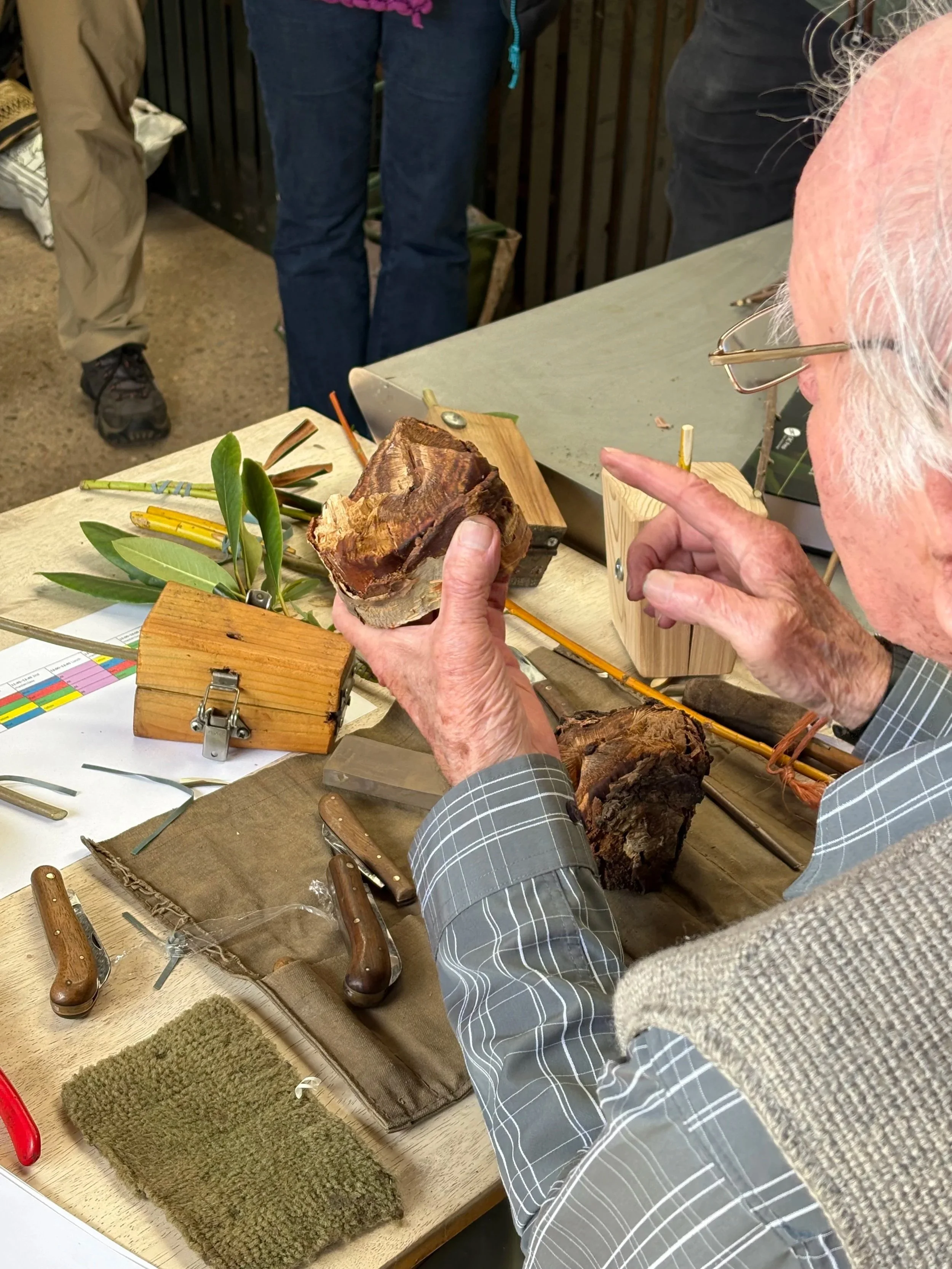
The magic happens in a thin green layer just under the bark called the cambium. That’s the living, growing tissue. If you can line up the cambium on the rootstock with the cambium on the scion — properly, cleanly, with a sharp knife and a steady hand — the two plants will knit together and become one. Get it wrong and they’ll never truly join. Brian passed around a birch graft that had grown for years looking perfectly fine, and then blew over in a storm and snapped clean in half at the graft line. The tissues had never actually united. He called it, matter-of-factly, “incompatible.”
That’s the quiet brutality of grafting. It either works or it really, really doesn’t.
The bit I will keep reminding myself of
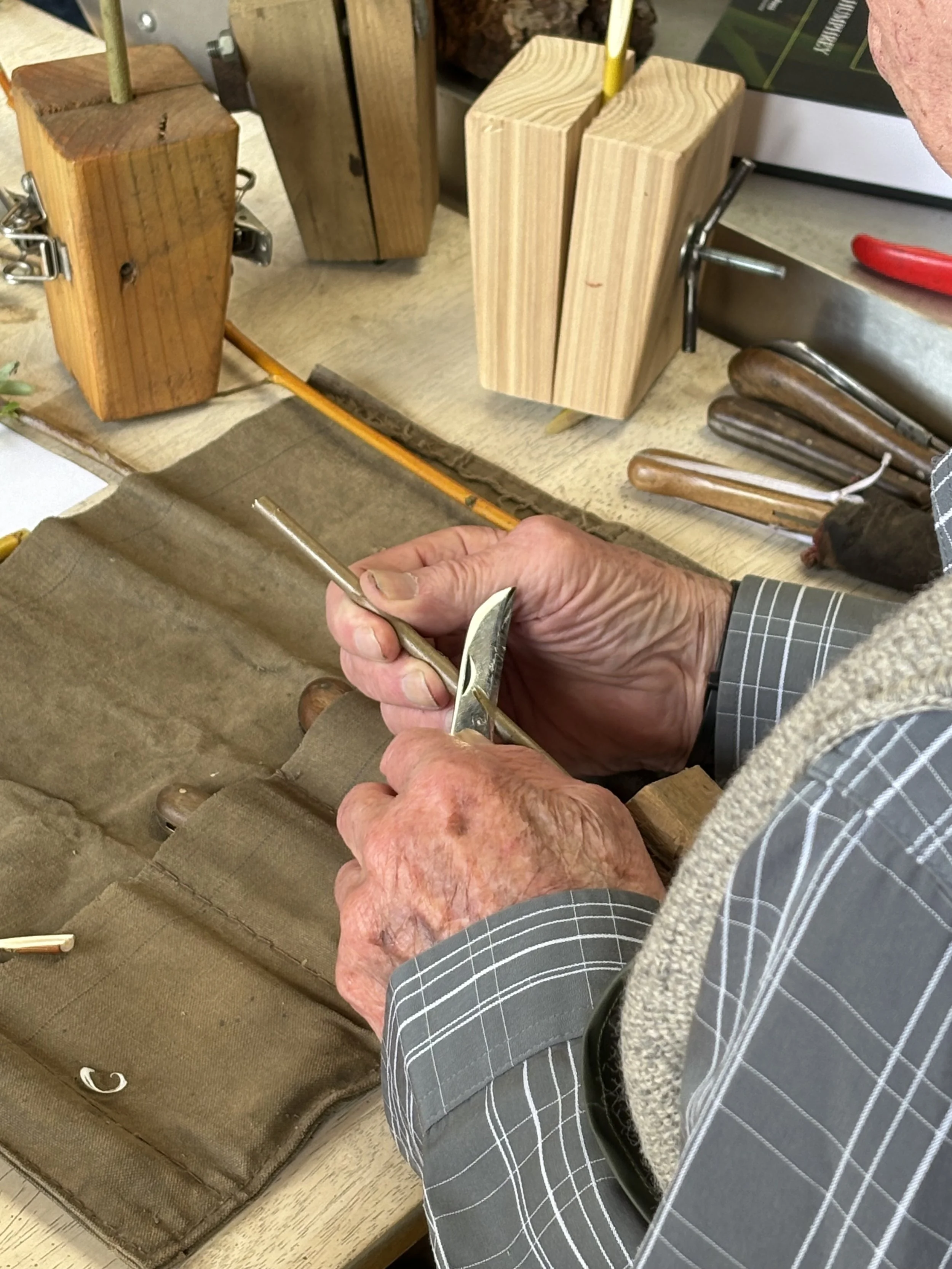
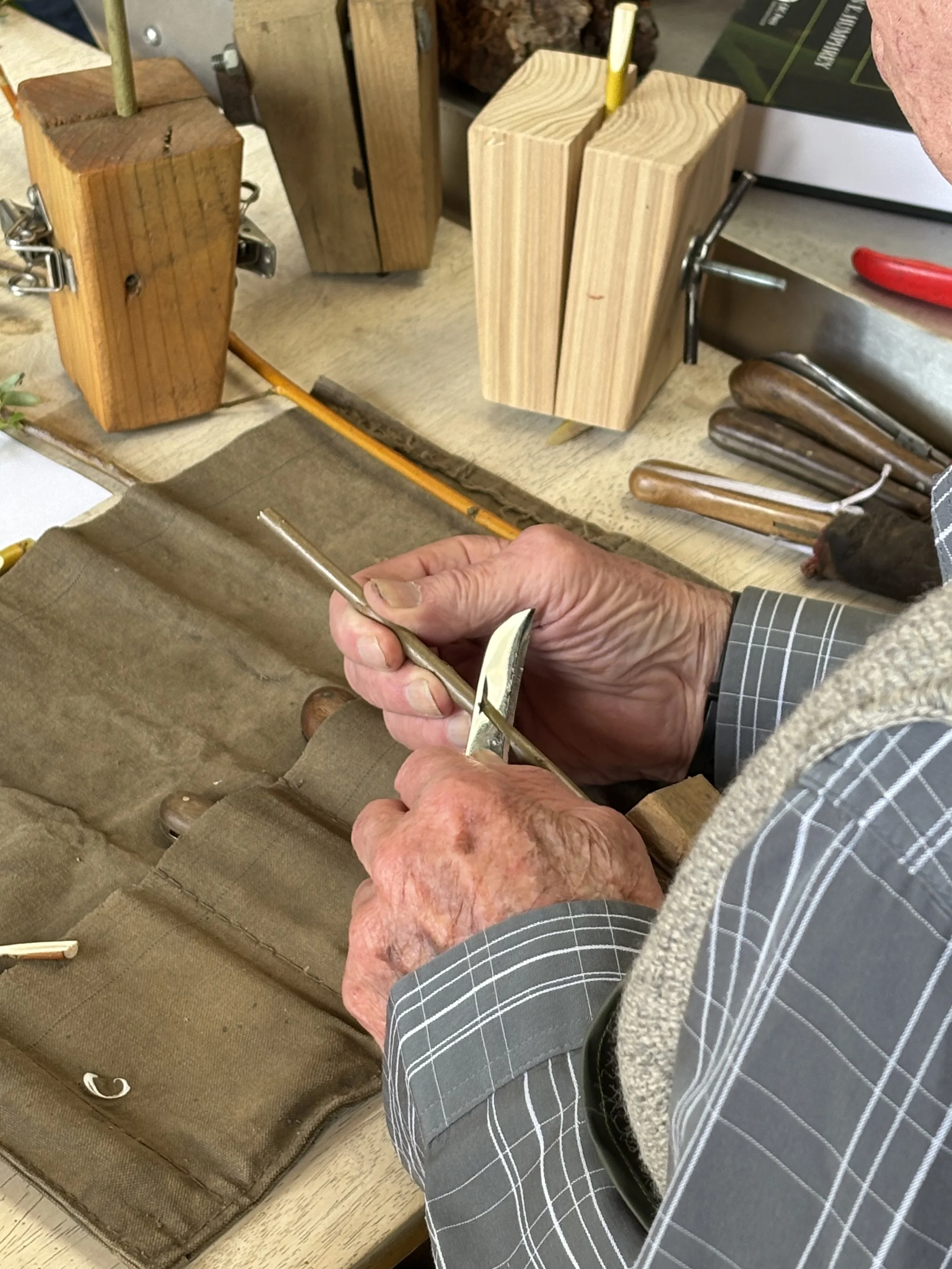
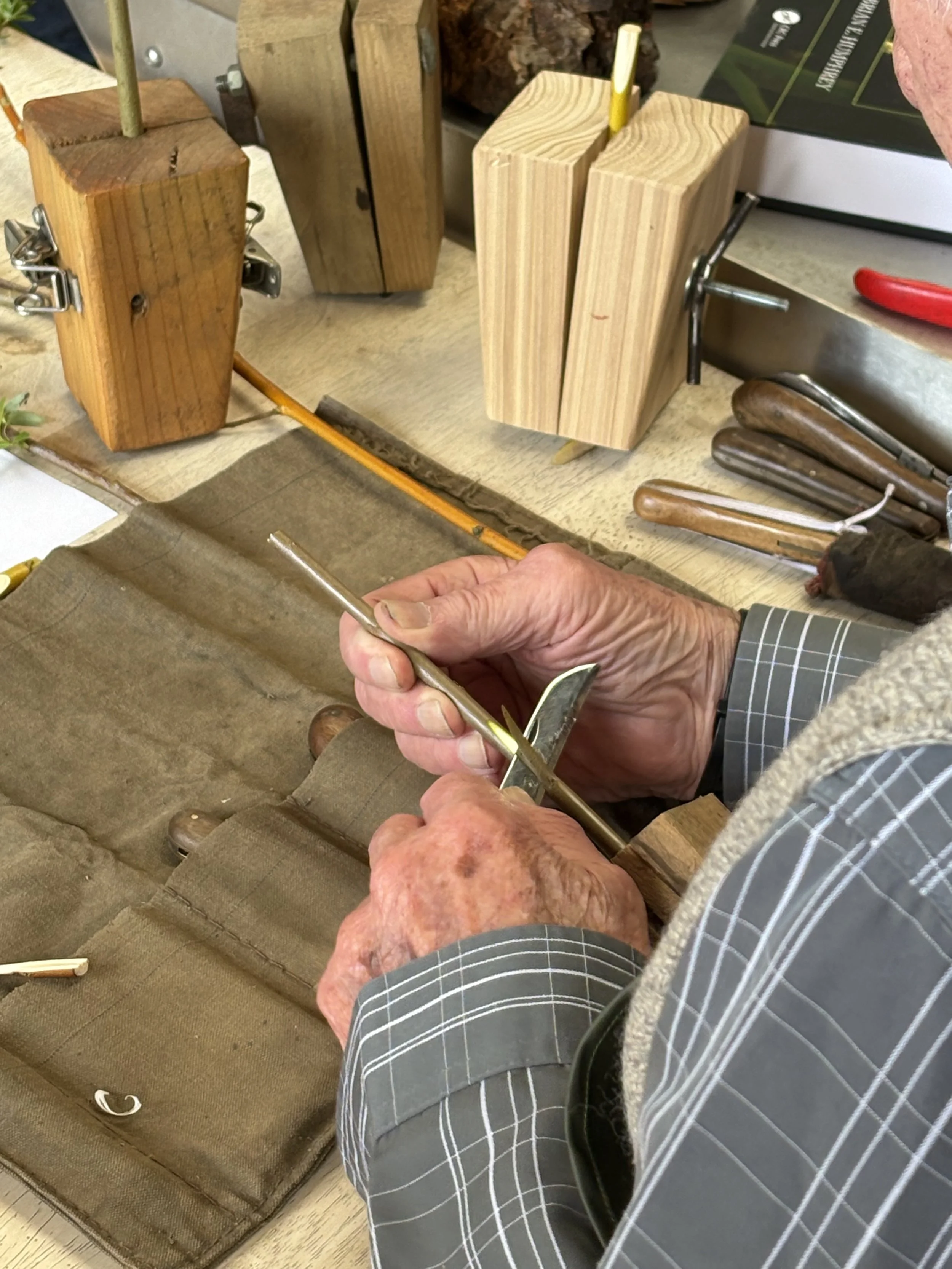
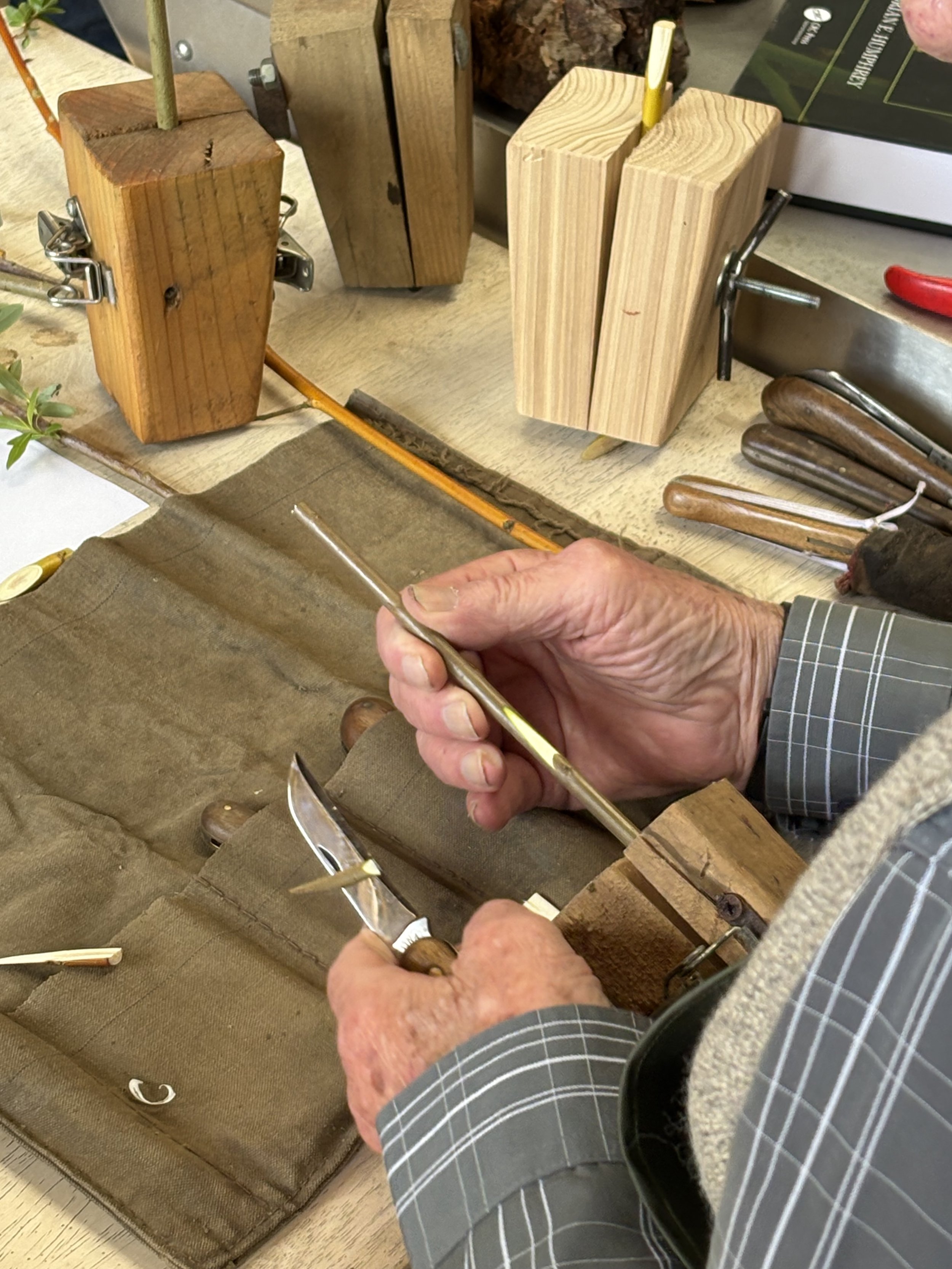
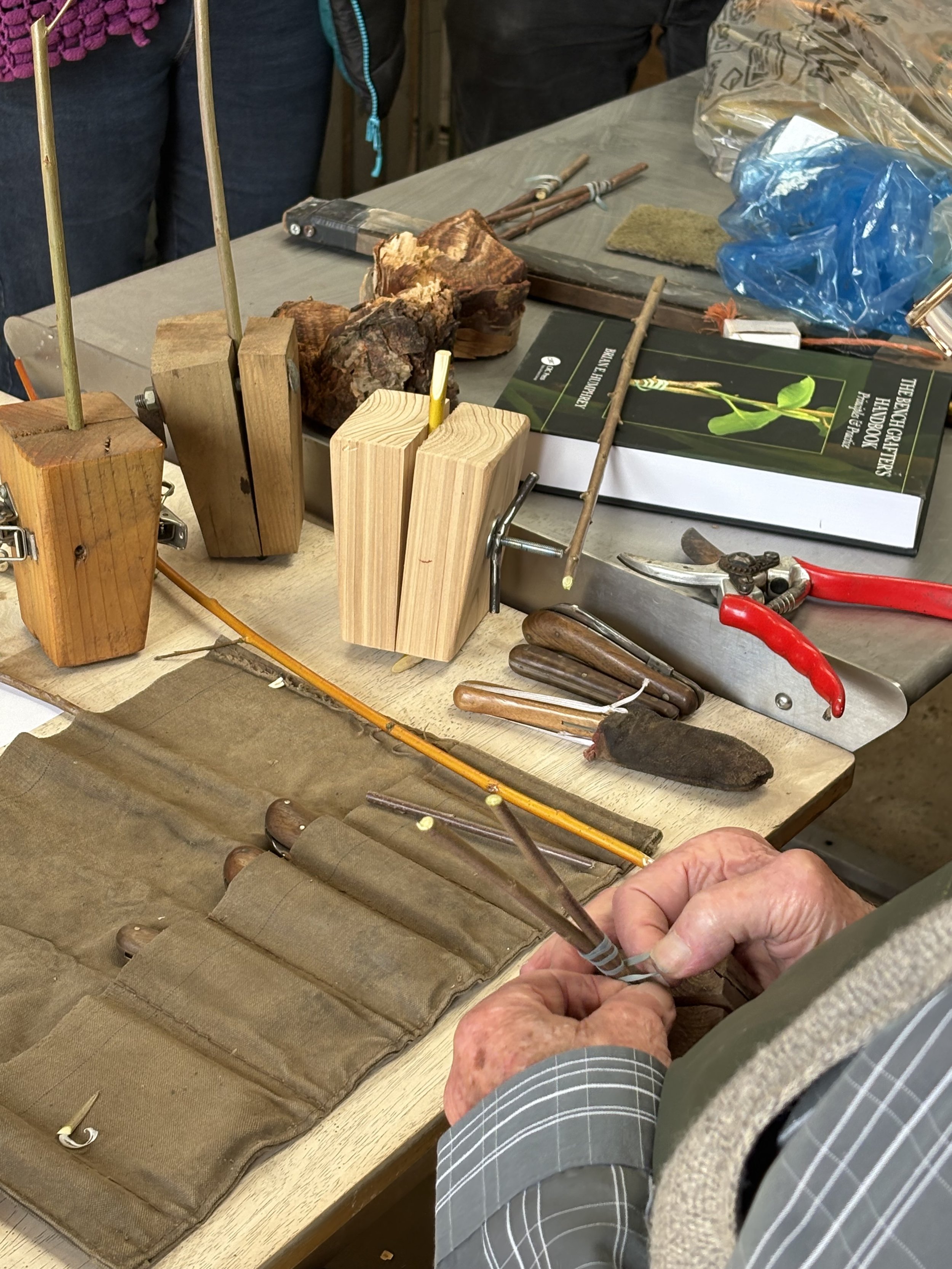
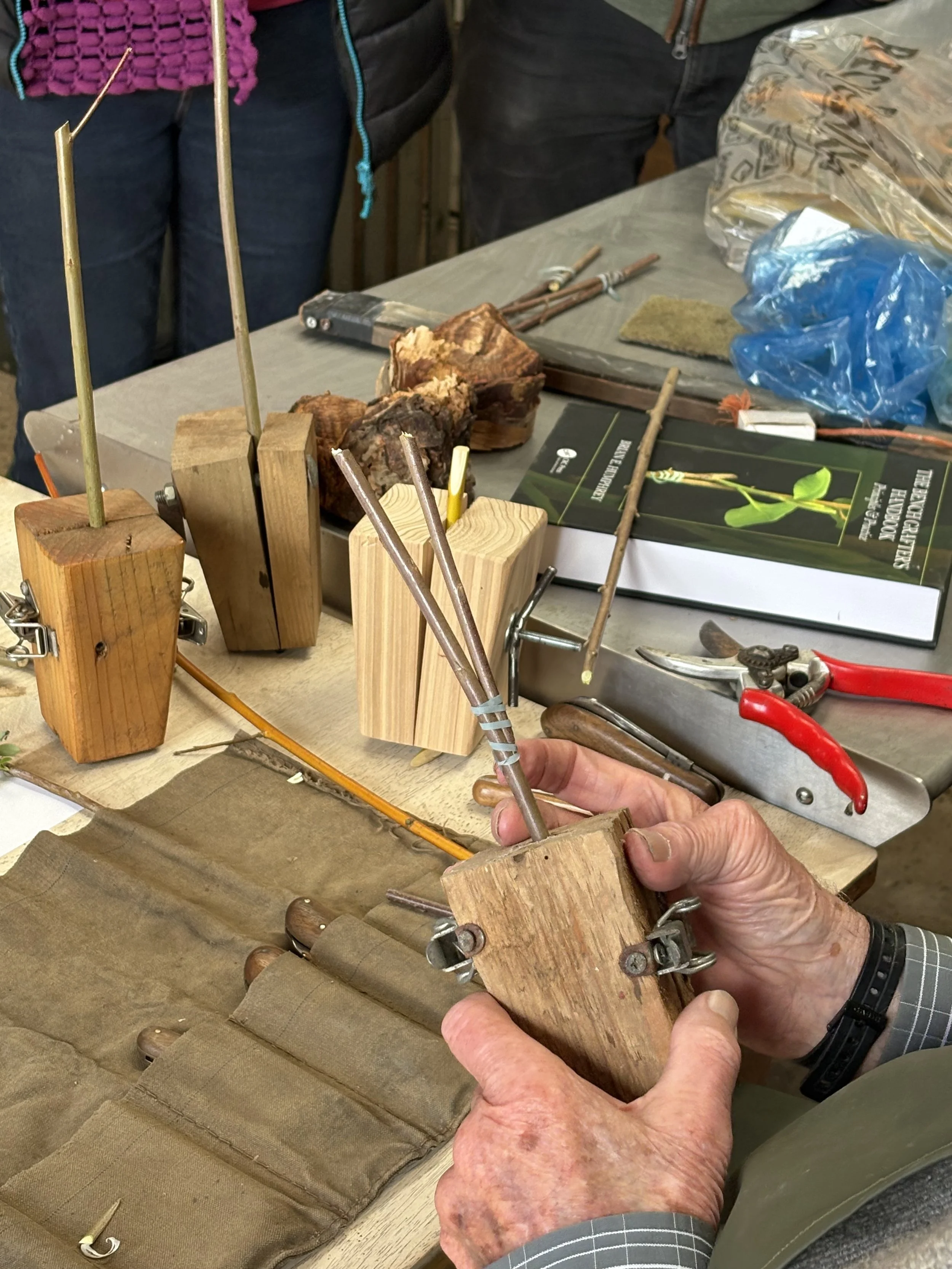
Brian said learning to graft is like learning a musical instrument. Then I watched him wield his knife.
He held his elbows tight to his sides. No flapping about. Wrist and forearm only. He used the edge of the pot as a pivot point, so his whole body stayed locked in position while the knife made one smooth, flat cut. The wood peeled away like butter. Thousands and thousands of repetitions had made it look like nothing at all.
Then he asked if anyone would like a go…
Safe to say, I didn’t want to put my hand up and have the pressure of everyone watching me butcher a perfectly good graft.
You can’t fake the steadiness. You can’t rush it. There’s no shortcut. Brian was generous and said most people who think they’re rubbish at grafting would be fine if they just put the hours in — but that’s the thing, isn’t it. The hours. Another legendary figure in the room had done 30,000 grafts a year at his peak. Thirty thousand. Every single one by hand, every single one a tiny act of judgement about which way the stem was curving and where the cambium would line up.
Why this matters when you’re buying plants
Someone in the room mentioned they’d seen a Japanese maple online for £28. Brian’s face did a thing.
He reckons a properly grafted, properly grown Japanese maple is worth £85 and probably more. And when you sit and watch the work that goes into it — the years of skill, the hand-forged German knives (one of his was made in 1962 and still going), the wax, the warm callusing benches, the waiting, the losses when a graft doesn’t take — you start to agree with him.
“We’ve got used to plants being cheap. But the skilled people who make the nice ones are retiring and not being replaced.” Brian told us that when he joined Hillier’s there were three specialist grafting units and that now you wouldn’t be able to staff one. That’s exactly the gap Hortistry is trying to close — preserving the knowledge before it walks out the door with the last generation who learned it.
So the next time you see a grafted tree with a price tag that makes you blink — a Japanese maple, a fancy magnolia, a weeping something — that price is the only thing keeping the skill alive.
What I’m taking back to the farm
I’m not about to start grafting magnolias at Evie & Flo. I’ve got quite enough to be getting on with.
But one thing did land: Alex, one of the growers in the room from Jordan’s Farm Foliage and Flowers, had lost a grafted rowan in last year’s drought, and the rootstock had started suckering back. Brian reckoned she could graft a cutting from the surviving variety back onto one of those suckers and save the tree.
That’s the quiet thing about learning a skill you’ve never thought about — you start seeing possibilities that weren’t there before.
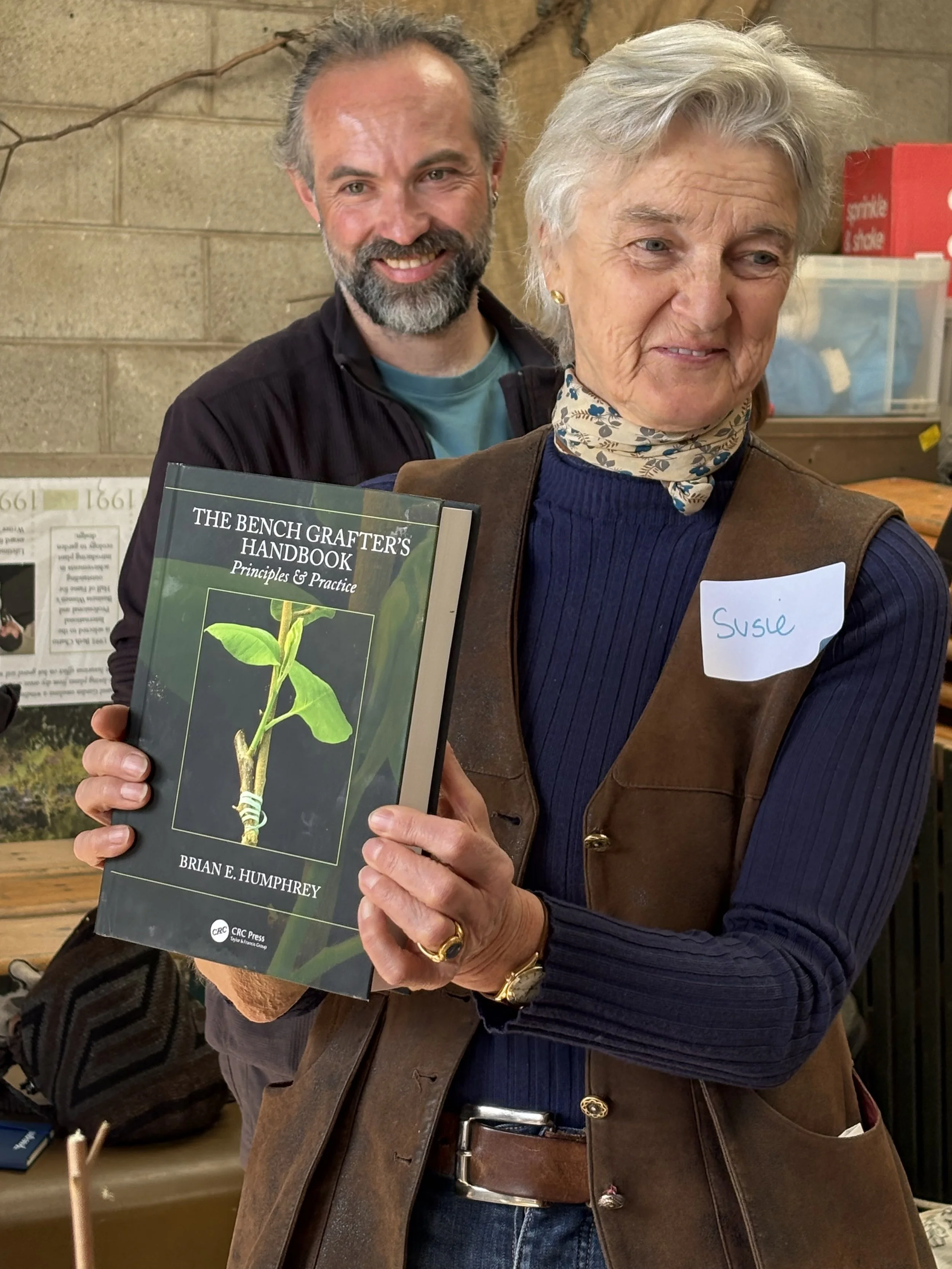
With huge thanks to Brian Humphrey VMH OBE, and the team at Hortistry. Brian’s book, The Bench Grafter’s Handbook: Principles & Practice (CRC Press, 2019), is the definitive work on the subject.